

Borodudur
- Teresa Parod

- Sep 14, 2024
- 2 min read
Borobudur is the largest Buddhist stupa in world. There is nothing like it in the world, although it uses shared ideas from other Buddhist and Hindu architecture. There are no interior spaces in stupas, and they often serve a similar purpose as temples. Architecture of this type is often in hot climates as rituals can take place outdoors. Stupas represent the sacred mountain, Mt. Meru in Buddhism and Hinduism. Some believe Mt. Meru is located in the Himalayas, though most feel it is mythological.
Borobudur is built on a hilltop with 6 square levels and 3 round levels, aligned with the 4 directions. The lower levels contain passageways encircling the structure lined with relief sculpture. The lower 3 levels depict desire through scenes of earthly life. Levels 4, 5, and 6 depict existence beyond desire through the stories of the Buddha. The top three levels represent the state of enlightenment and contain statues of Buddhas covered with stupas. The devout may reach inside these stupas to touch the statue of the Buddha. The risk is that these are places snakes might be and it is a test of faith. However, with the multitudes of visitors, I think the snakes now stay away.
The floor plan is a mandala, often used in Buddhist and Hindu art. The holiest part is the center, with sacred elements surrounding it, that are often used for teaching and devotion. Here there is sculpture for those purposes.
Fortunately, Borobudur is now a UNESCO World Heritage Site, so there is active guidelines for preservation. Everyone must wear bamboo sandals when visiting and can only stay for an hour. It is the most visited site in Indonesia. I cannot put into words what it is like to be there. When I was there, I just tried to absorb and be in the moment. Like many monumental work, I always wonder who made the first cut of the first stone or who dug the shovel of dirt to create the foundation. Did they envision the end result to what they were beginning?

Floor plan from Wikipedia


We had a great guide with a real approeciation for Buddhist philosophy and history.

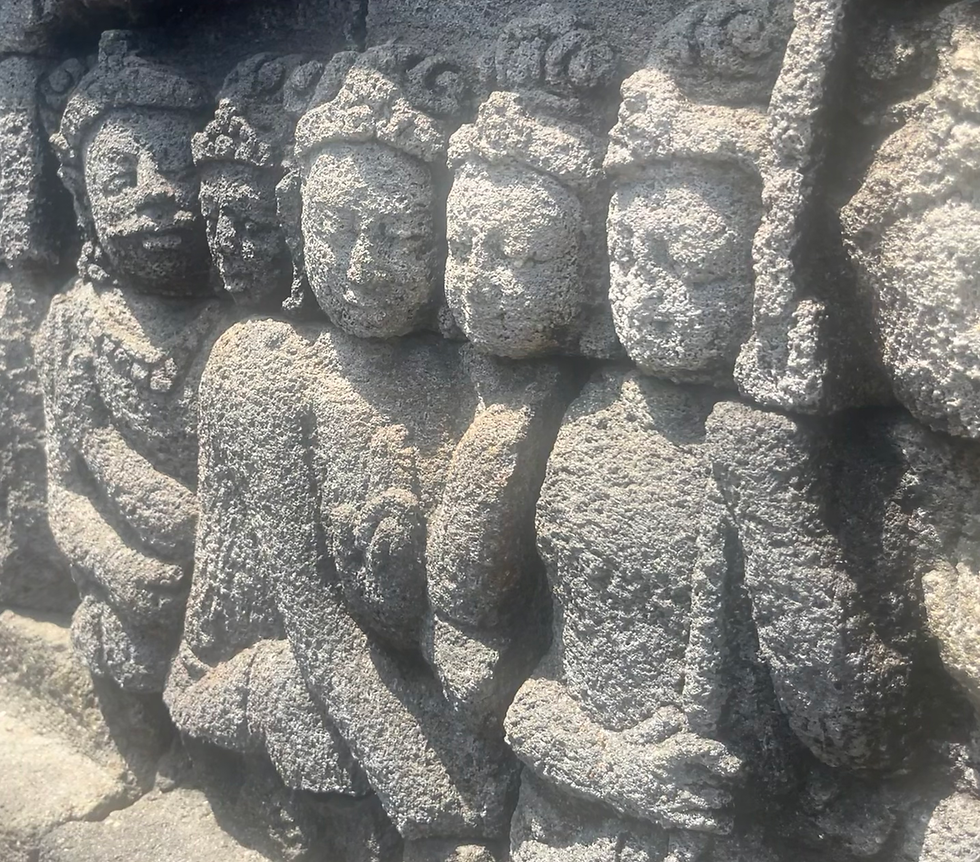
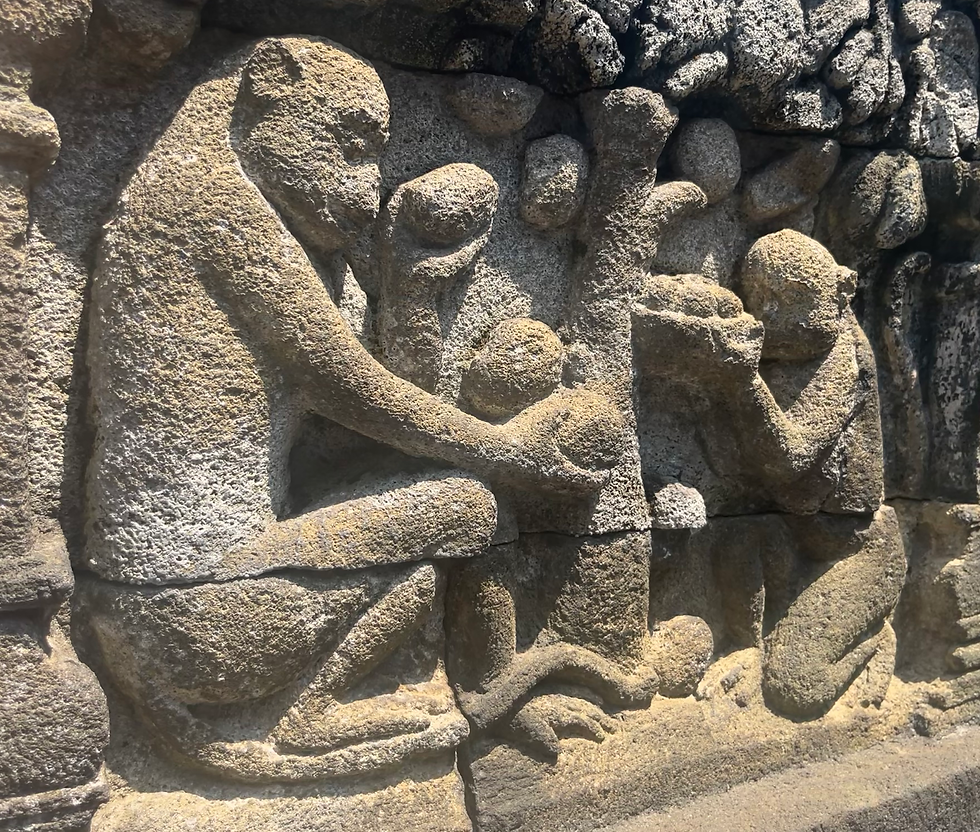
Beautifully expressive stone panels along the way up.






The upper level


Comments